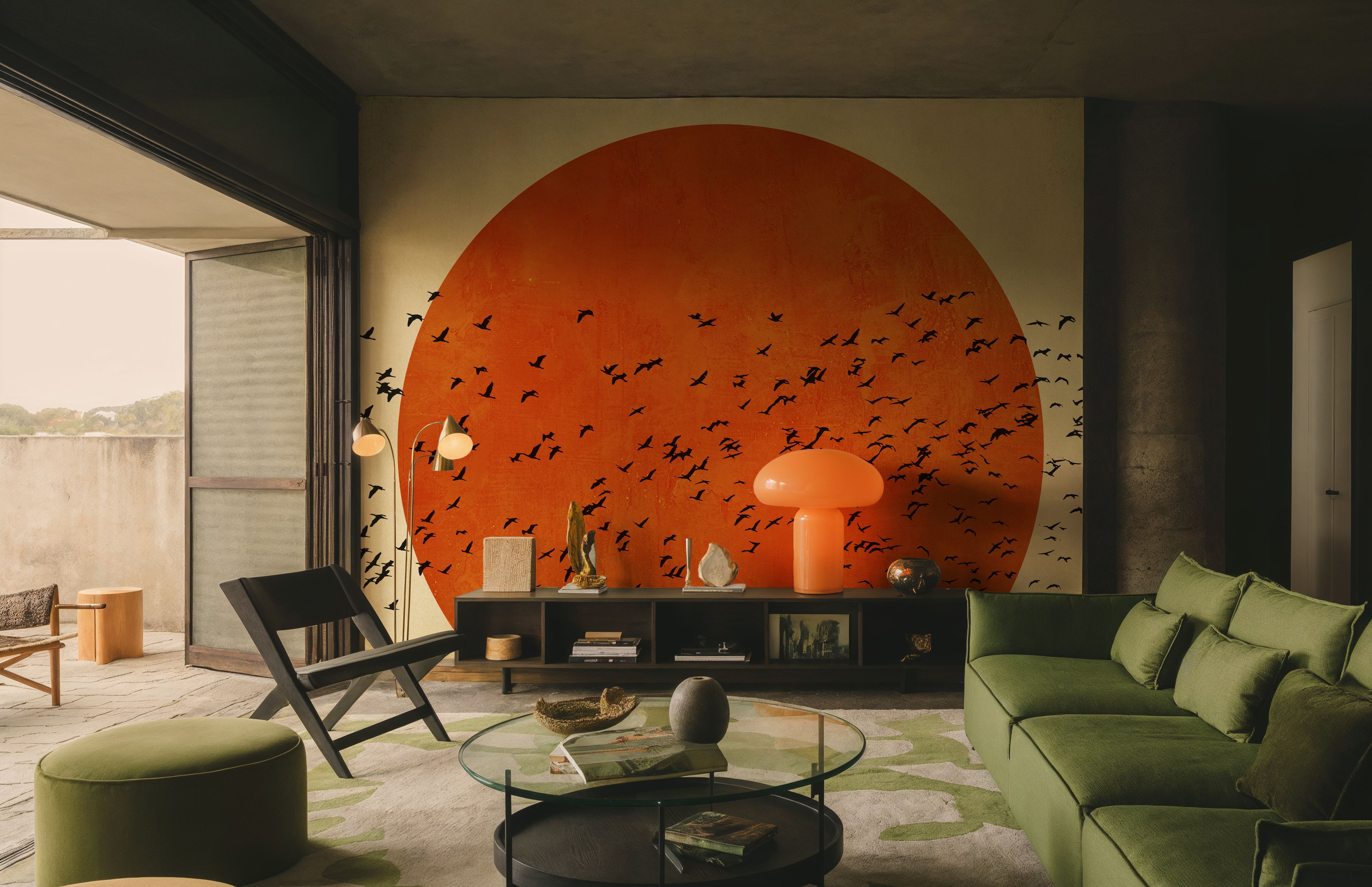
Wallpaper in a sunny room: will it fade, and which designs hold up?

If your room gets a lot of sun, it is natural to wonder what all that light does to wallpaper. Strong sun fades weak colors over time, washes out pale designs at midday and makes warm tones look warmer. A well-made wallpaper copes with it far better than most people expect, as long as you choose the design with the light in mind.

Will it fade?

Every colored surface changes a little after years of direct sun, paint and fabric included. What decides how much is the lightfastness of the colors. Ours are rated 6 to 8 for lightfastness on a scale where 8 is the highest, and they are UV-resistant, so they are made to hold their color on a wall opposite a big window.

That makes it a safer choice for a sunny wall than some natural materials. Real grasscloth, for example, fades in strong direct sun, and darker shades fade fastest. If a wall takes the full afternoon sun every day, blinds or curtains during the brightest hours are still worth it, for the wallpaper and for everything else in the room.

How strong light changes a design

Bright midday sun flattens contrast. A pale, low-contrast design that looks soft and subtle on a gray day can almost disappear when the sun is on it, while a design with clear contrast or deeper mid-tones keeps its character. If you love pale colors, choose a design where the motif is still clearly defined.

Sunlight is also warm. A room that gets direct sun for much of the day makes warm colors look warmer still, so terracotta, ochre and yellow can tip from cozy to hot. Cool blues, soft greens and gray neutrals balance that heat. Fucus Seaweed, French Blue , a blue seaweed repeat on a pale ground, keeps a sun-filled room feeling fresh. Faux Wall Panel Moulding, Sage brings in green with the structure of classic paneling. Ticking Awning Stripes, Baby Blue , blue and cream stripes, gives a sunny room the easy feel of a summer awning.
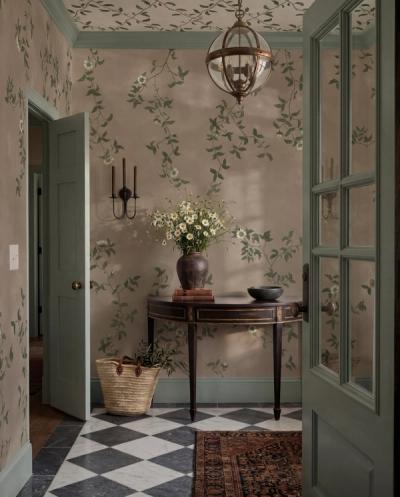
Order a sample and tape it to the wall you plan to cover. Look at it in the morning, at noon and in the evening.

Why a matte finish helps

A glossy or satin surface bounces strong light back as glare, and low sun raking across a wall shows every bump and patch. Our wallpapers have a matte, slightly fibrous surface that does not throw light back the way a sheen does, which keeps a bright wall calm to look at.

The wall underneath still matters. Side light exposes unevenness, so fill and sand the wall before you hang. If the wall is not perfectly smooth, a busier or darker design tends to show small bumps less than a plain white background. Subtle Plaster Wall , a soft gray plaster effect, is a good middle ground. It reads as a calm surface but has enough variation to be forgiving.

Test it in your own light

Your own room is the only reliable test. Order a sample and tape it to the wall you plan to cover, then look at it in the morning, at noon and in the evening. A color that looks right at breakfast can look completely different in late afternoon sun, and the sample shows you which version you will live with most.

Pay most attention to the time of day you use the room. A living room used mostly in the evening should be chosen in evening light, even if it is flooded with sun at midday.

Hanging wallpaper in a hot, bright room

Heat speeds everything up, including the paste. Let the opened rolls rest in the room for at least 24 hours before you start, so the paper adjusts to the room's humidity. On hanging day, avoid working while direct sun is on the wall, and paste one strip at a time, covering the width of the strip and a little extra, so the paste never dries before the strip goes up. While the paste is wet, the strips can still be adjusted slightly sideways.

Afterwards, let the wallpaper dry for at least 24 hours at room temperature with good ventilation. Just as you would switch off a radiator on the wall to reduce the risk of uneven shrinking, draw the blinds so strong sun does not heat the wall while it dries.