
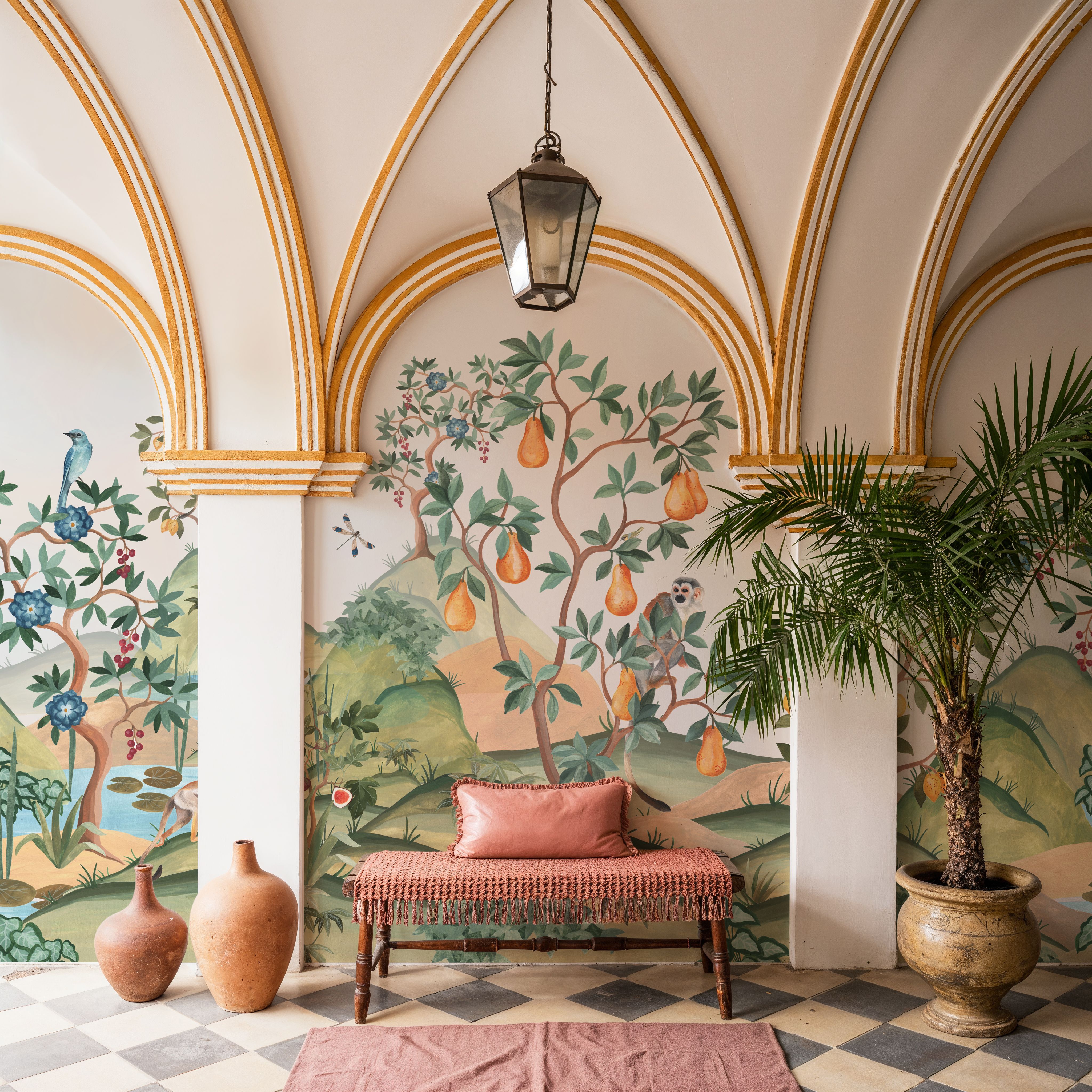
Light wallpaper can give a windowless room an airier feel, while a dark background with pale details can give it a cozier feel. Choose for the way you use the room, and compare colors with the lights you normally have on.
Look at the background first
For a light look, pay attention to the background color and how much of it shows. Small white flowers don't make dark wallpaper look light. Look for an image where a large part of the surface has the brightness you're after.
White Cherry Blossoms II is one of our most ordered floral designs. White blossoms grow along branches against a warm yellow background. The spaces between the branches have color, too, making this an option for a warm wall with clearly visible flowers.
Order a wallpaper sample, a small printed piece of wallpaper, to check the yellow under your room's lighting. That color will cover much more area on a full hallway or closet wall. Look at the full product image as well to see how the color and branches are distributed.
Let pale details stand out against a dark background
For a cozier feel in a small room, start with a dark background and a design that stands out against it. That might suit a library, hallway, or home office where you want the walls to have more character.
Overleaf Woodland, Cocoa has pale branches, leaves, and a symmetrical woodland composition on a dark brown background. We would want to keep the contrast between the background and those light details visible under the room's lighting.
Check how the branches appear with the lamps you plan to use. If much of the design disappears in a shadowy part of the wall, consider a lighter wallpaper, another position, or more light in that spot. Choose the wallpaper and lighting together.