
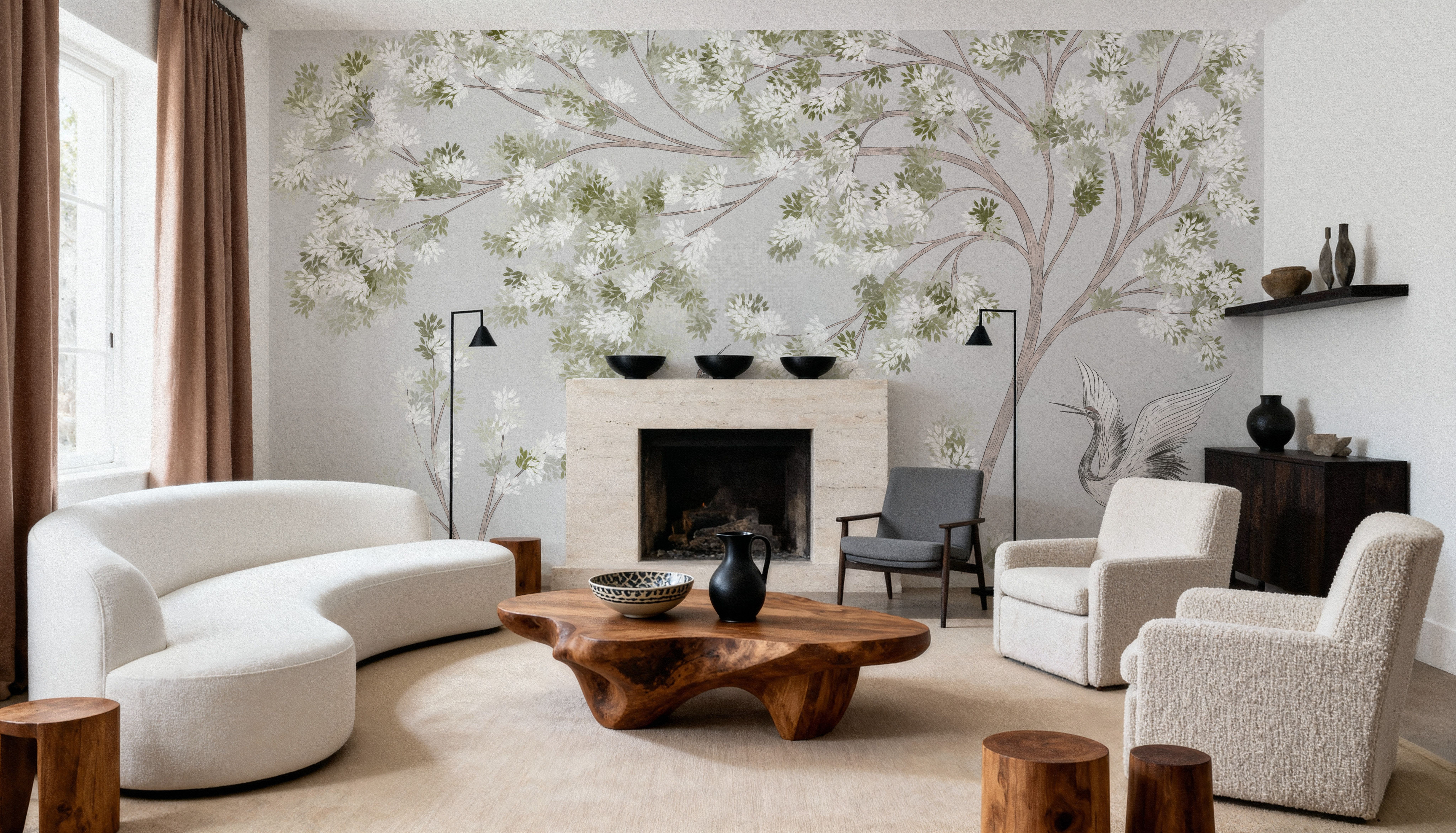
The best accent wall is usually the one you see first, with the fewest doors and windows breaking it up.
A mural adds one more test, the shape of the wall. The image is printed to your exact measurements, so the width and height of the wall decide how much of the design you will actually see.
Start with the wall you see first
Stand in the doorway and notice where your eye lands. In most living rooms it is the wall facing the entrance or the long wall behind the sofa. That is where a mural earns the most attention for the least wallpaper.
Then sit down where you spend most of your time, because many rooms have two views. In a bedroom, you see the headboard wall as you walk in and the opposite wall when you wake up. Both can work, so decide whether the design is for the room's first impression or for you.
A home office has a third viewer. The wall behind your chair is what colleagues see on every video call, while the wall you face is the one you live with through the workday.
Count what interrupts the wall
Doors, windows, radiators, a mounted TV and tall shelving all take something away from a mural. When you order, you measure the full width and height of the wall and ignore the openings. We print the mural as one complete rectangle, and the parts that fall over a window or door are cut away during installation, along with that piece of the picture.
Note roughly where each opening sits before you choose the design. A window might start 3 feet from the left corner and run 4 feet across. Knowing that, you can place the image so the part you care about stays on solid wall.
A wall with several openings often suits a different kind of design. Orchard Reverie by Cebine shows the difference well, because it comes in two versions. The mural gathers rolling hills and trees heavy with pears and lemons along the lower part of the wall, under an open cream sky. Orchard Reverie Pattern repeats the hills, trees and small animals across the whole surface. Cut a window out of the mural and you may lose the group of trees you liked most. Cut it out of the pattern and the same scene simply carries on around it.

