
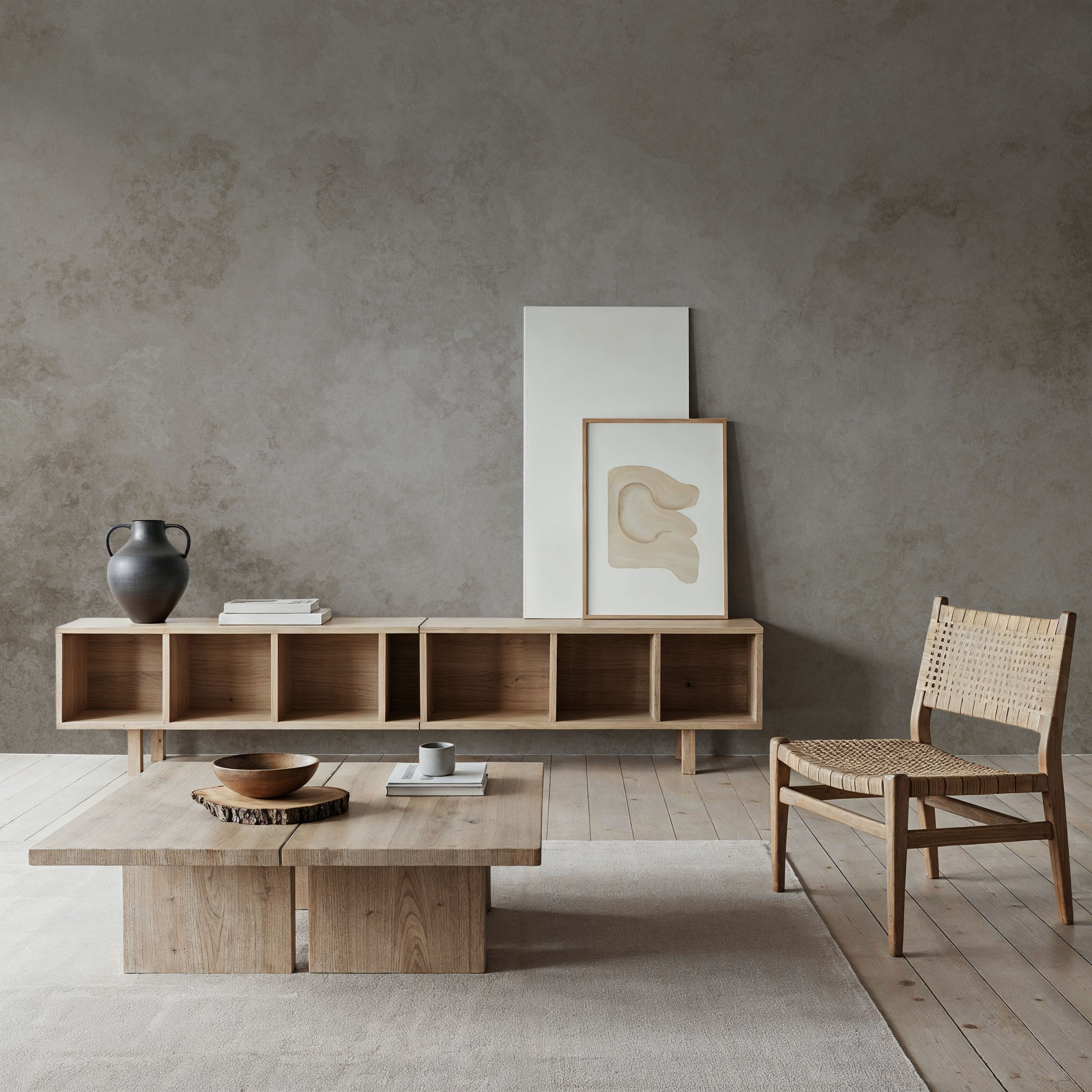
Plaster looks soft and warm, concrete looks cool and urban, and stone brings pattern and weight through its veining. Choose plaster for a calm backdrop in almost any room, concrete for a pared-back modern room or a workspace, and stone for one wall you want to look solid and polished.
Plaster is the quietest of the three
A plaster effect is made of soft tonal shifts with no clear direction. It reads as a hand-finished wall rather than a picture, which is why it works across large areas and on small sections alike.
Subtle Plaster Wall is built from cloudy layers of pebble grey and soft beige that move across the surface without lines or a visible pattern. In a hallway or a kitchen nook, it adds texture while leaving the furniture and lighting to set the tone.
Choose plaster when you want the wall to feel finished but not decorated. It sits easily with natural wood, linen, wool and plants, and it works in both traditional and modern rooms because it has no period of its own.
Concrete is cooler and more architectural
Concrete has a harder character. The tones are greyer, and the surface carries more marks, speckles and patina, like a wall that has been exposed for years.
Rough Concrete Panoramic layers smoky grey, muted beige and rust-coloured traces across a wide image, so the surface stretches across a long wall as one continuous picture. Behind a low sofa or in a home office, it gives an industrial edge without the noise of a busy pattern.
Choose concrete when the rest of the room is simple and you want the wall to add some grit. It suits black metal, leather, oak and strong single colours. In a room full of soft furnishings, it can also act as a counterweight.
Stone brings pattern through its veins
Stone and marble are the most patterned of the three. The veins add lines and movement, so stone draws the eye in a way plaster and concrete do not.
Botticino Marble II has broad sweeping veins in taupe, earthy brown, beige and cream, with softer cloudy passages between them. On a large uninterrupted wall, such as the wall behind a dining table, it reads like a single slab of stone.
Choose stone for one wall that should look solid and slightly formal. Because the veining is already a pattern, keep the other walls plain and avoid placing another strong pattern next to it.