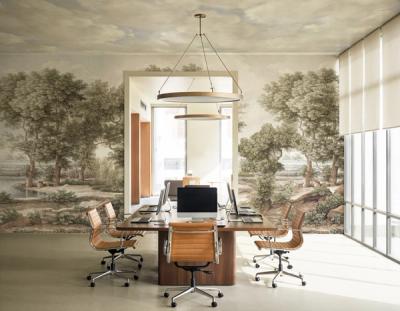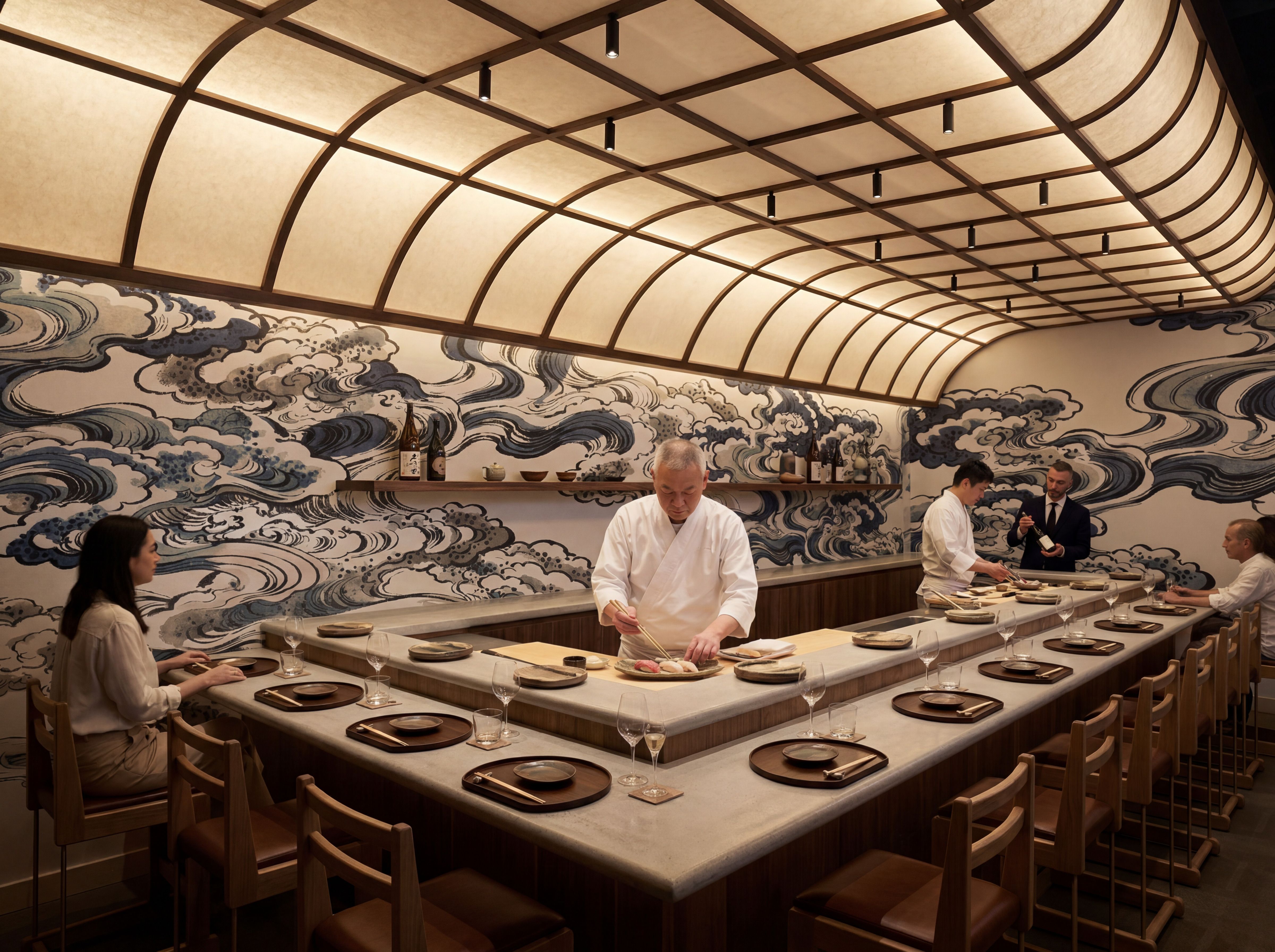
A café, a restaurant or a shop takes more wear than almost any room at home, and wallpaper can still be the right choice for it. Few finishes change the character of a space as much. A commercial wall just has a few extra demands: fire rules, cleaning, wear and walls that rarely come in standard sizes.
Fire classification comes first
Before you fall for a design, find out what the wall has to meet. Requirements for wall linings vary by country, by type of space and by whether the building has sprinklers, and they are often stricter in corridors and escape routes than in the rooms themselves. The property owner, the architect or a fire consultant can tell you which class applies.
Our wallpaper is classified B-s1,d0 under the European standard EN 13501-1 and rated Class A under the American standard ASTM E84, and that applies to all our papers. The European scale runs from A1, non-combustible, down to F. B means a combustible material with a very limited contribution to a fire, s1 is the lowest level of smoke production and d0 means no flaming droplets. B-s1,d0 is the best class most decorative wallcoverings reach, so a space that requires A2 or A1 needs a different finish. In the US, Class A is the highest of the three classes based on ASTM E84 results.
A classification applies to the wallpaper as tested, on a specified wall and with a specified paste, so share the test report with whoever signs off the project. If you need the documentation, ask us for it before you order.
Cleaning and wear
Commercial walls get touched, brushed and splashed. Our wallpapers are washable. A damp cloth handles everyday marks, and for stains you can use soapy water or a mild detergent, rinse with plenty of lukewarm water, wipe off the excess and let the wall dry on its own, as long as you keep water out of the seams.
Where you put the wallpaper matters as much. Keep it away from spots that are splashed every day, such as behind a coffee machine, a bar sink or a kitchen pass, and use tiles or a hard-wearing paint there. Where chairs, bags and shoulders meet the wall, behind banquettes, along the queue at the counter or next to the door, consider a hard-wearing lower section with wallpaper above it, or start the design above the height where people lean.
Before you fall for a design, find out what the wall has to meet.
Walls that are never standard
Commercial interiors rarely have tidy rectangles. Long walls, odd heights and walls broken up by doors, windows and counters are the norm. Made-to-measure wallpaper handles that well. You measure the width at the widest point and the height at the tallest, add 5 to 10 cm, and we print the design to fit.
If the design should run along several adjacent walls, add the widths together and order them as one wall, so it continues without a break. With a mural, use the preview to move the design until the focal point lands where guests will see it, above the banquette rather than where shelves or a door hide it.
Choosing a design that works for business
Start with what the space should feel like at its busiest hour. A restaurant that comes alive in the evening suits deep, rich designs. Vintage Peonies Pattern , with beige peonies on a dark background, or Peacock and Peony Chinoiserie Teal gives a dining room an intimate feel under low light. A café that runs from breakfast to afternoon often works best with a lighter, cheerful design on one statement wall and plain walls around it.
In a shop, the walls should stay in the background so the products stand out. Surface designs give depth without pulling attention from the shelves. Aged Texture is a rustic plaster in warm browns, and Faux Grasscloth with Visible Seams, Graphite is a grey woven texture.