Wallpaper or paint? How to decide wall by wall

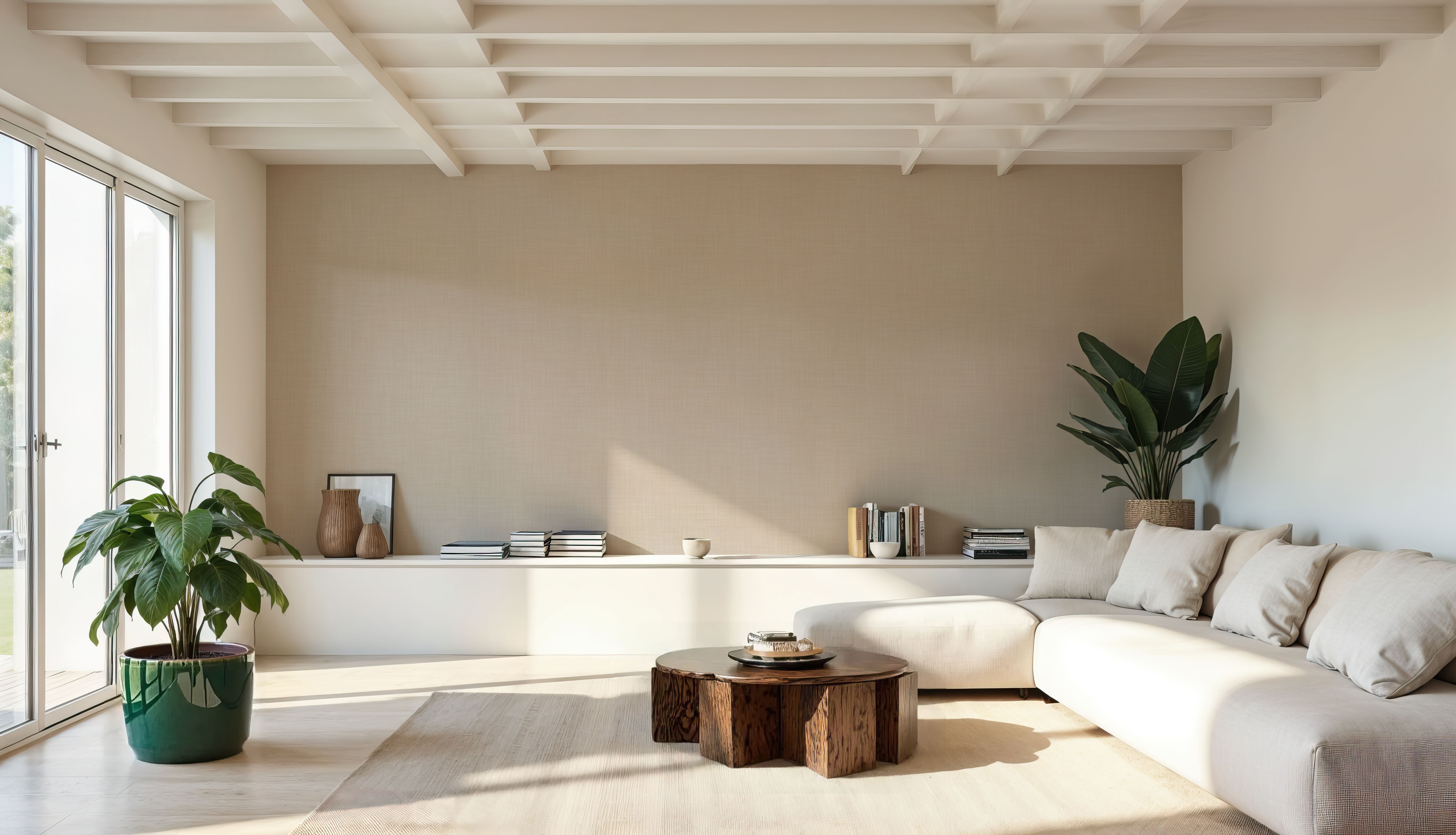
Mottled Linen Effect, Beige: the calm of a painted wall with far more depth

Paint is quick, cheap and easy to change. Wallpaper gives a wall something paint cannot, from a pattern or a picture to the depth of plaster or linen, and it lasts for years longer. The right answer depends less on which is better in general and more on what each wall has to do. This is how we would decide.

What paint does better

Paint wins on speed and flexibility. You can change a colour over a weekend, and when a wall gets scuffed you touch up the mark with a brush instead of replacing anything. That makes paint the practical choice for the surfaces that take the most wear, such as the lower half of a busy hallway or the wall behind a row of coat hooks.

Paint also copes with walls that wallpaper does not like. Wallpaper needs a surface that is clean, smooth, firm and dry, so a heavily textured wall either needs a skim coat first or is better painted. And near water, paint is the safer of the two, while the spots where water hits the wall directly, inside a shower or right behind a sink or a hob, belong to tiles.

What wallpaper does better

Wallpaper does what paint cannot. A mural turns a wall into a picture, a repeating pattern gives a room rhythm, and a surface design can bring the look of limewash, plaster or linen without hiring a specialist. Subtle Plaster Wall, a soft grey plaster effect, and Mottled Linen Effect, Beige give the calm of a painted wall with far more depth.

It also lasts. Busy rooms usually need repainting every few years and quiet ones roughly once a decade, while a well-hung quality wallpaper typically lasts ten to fifteen years or more. Our papers are highly washable and wipe clean with a damp cloth, and the colours are rated 6 to 8 for lightfastness on a scale where 8 is the highest, so a wall opposite a big window keeps its colour.

The finish is different too. Our wallpapers have a matte, slightly fibrous surface that does not catch the light the way a satin or eggshell paint can, which helps on long walls where every patch and roller mark would otherwise show.
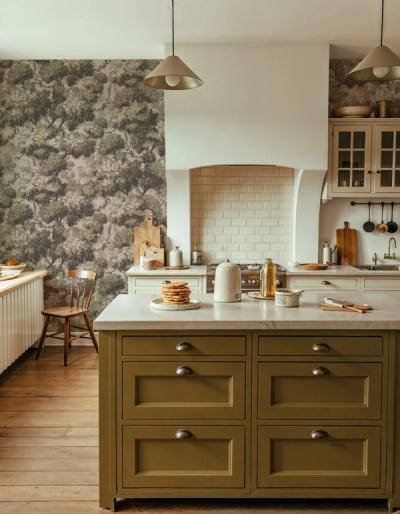
The effort, honestly

Paint is cheaper up front and easier for a beginner. Wallpaper costs more per wall and takes more preparation, but it is less work than most people expect. Our paste-the-wall papers go up like this: you apply paste to the wall, hang dry numbered strips edge to edge and trim the top and bottom. There is no soaking time, and the strips can be nudged sideways while the paste is wet. Most of our customers hang their wallpaper themselves, many for the first time.

Changing your mind later is also easier than its reputation suggests. A wallpaper primer underneath makes it much easier to take the paper down in full strips with hot water and a sponge, so the wall is ready for whatever comes next.

Where each one belongs

Paint is our pick for ceilings in steamy kitchens, the walls closest to water and any wall you expect to change every year or two. Wallpaper is the stronger choice for bedrooms, living rooms, dining rooms, home offices and cloakrooms, where the walls see less wear and a design can stay for years. It also works overhead. Our paste-the-wall papers can go on a ceiling, as long as the surface is completely smooth and you have a second pair of hands.

If you rent, there is a middle way. Peel & Stick is self-adhesive and comes off when you move out, but it needs a smooth wall and is not meant for textured walls, ceilings or bathrooms.

The best rooms use both

The most finished rooms rarely choose one or the other. A wallpapered feature wall with the other walls painted in a shade taken from the design, a painted lower wall with wallpaper above a dado rail, or a ceiling painted in the background colour of the paper all tie the two together. Start with the wallpaper, because a paint colour is easy to match to a design and a design is much harder to match to a paint colour.

Common questions

Can I wallpaper a textured wall? +

Wallpaper needs a surface that is clean, smooth, firm and dry, so a heavily textured wall either needs a skim coat first or is better painted.

How long does wallpaper last compared to paint? +

Busy rooms usually need repainting every few years and quiet ones roughly once a decade, while a well-hung quality wallpaper typically lasts ten to fifteen years or more.

Is wallpaper hard to remove if I change my mind? +

A wallpaper primer underneath makes it much easier to take the paper down in full strips with hot water and a sponge, so the wall is ready for whatever comes next.