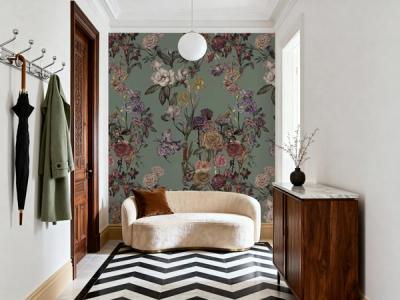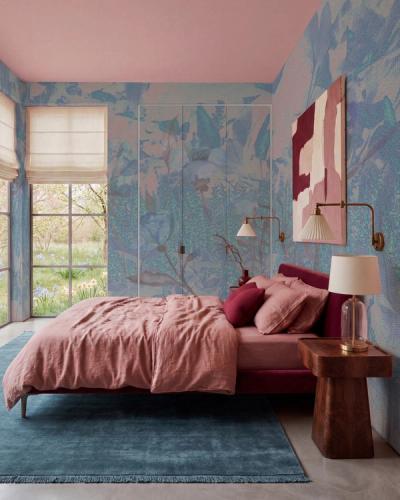
Across Central and Eastern Europe, millions of people live in flats built from prefabricated concrete panels, such as the Czech panelák, the Polish wielka płyta and the Hungarian panelház. In Czechia alone, around three million people live in panel buildings. The rooms are practical, often identical from floor to floor and short on architectural detail, which is why wallpaper suits them so well. Concrete walls need a little extra preparation, and low ceilings call for the right designs.
Why panel flats suit wallpaper
Panel buildings were designed to house a lot of people quickly, and it shows in the interiors. Plain walls, no cornices, no mouldings and the same floor plan as the neighbours upstairs and down.
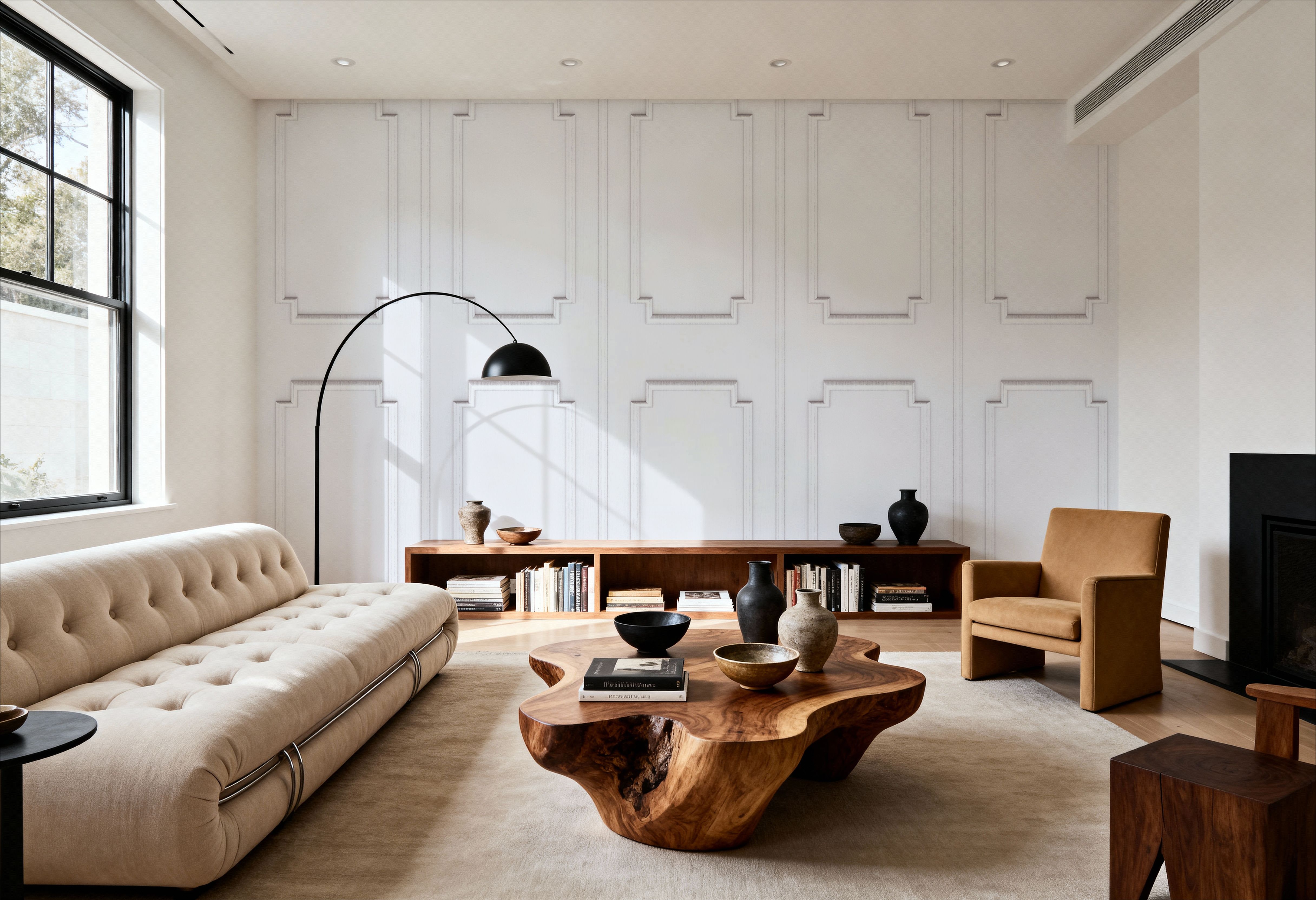
Wallpaper adds the character the building left out, without any construction work. Faux Wall Panel Moulding, White gives a living room or bedroom the look of classic panelling, which is far easier than fixing real mouldings to reinforced concrete. And in a building where every flat has the same layout, wallpaper is an easy way to make yours feel like your own.
Start with the wall: concrete, joints and old skim coats
The walls in a panel building are concrete, often finished with nothing more than a thin skim coat. Over the decades, the joints between panels can show up as fine cracks or slight dips, and an old skim coat laid over old paint can start to loosen. Wallpaper needs a surface that is clean, smooth, firm and dry, so preparation matters more here than in most homes.
Check the wall for loose skim or flaking paint and scrape it back. Fill cracks along the panel joints and sand them flat. Wash the wall with warm water and a mild soap and let it dry for at least 24 hours. If the old paint is dark or strongly coloured, paint the wall a light neutral first, so it does not show through where the strips meet. A wallpaper primer is worth the extra step. It makes the strips easier to slide into place, and it makes it easier to take the paper down in full strips later with hot water and a sponge.
If the wall is still a little uneven after all that, choose a busier or darker design, which tends to show small bumps less than a plain white background.
Low ceilings: draw the eye upward
Ceilings in panel flats are lower than in older city flats, often around 2.5 to 2.6 metres. Wallpaper can make them feel higher. Vertical lines lead the eye up, so stripes and vertical textures are the classic choice. Ticking Awning Stripes, Sage brings soft green stripes to a kitchen or bedroom, and Faux Grasscloth Vertical, Taupe gives a living room a warm, vertical texture in earthy brown.
Take the wallpaper all the way to the ceiling, without a border, and keep the ceiling itself light. In a low room, a horizontal split halfway up the wall cuts the height in two. If you want paint and wallpaper together, keep the painted part low and let the wallpaper run from there to the ceiling.
Vertical lines lead the eye up, so stripes and vertical textures are the classic choice.